
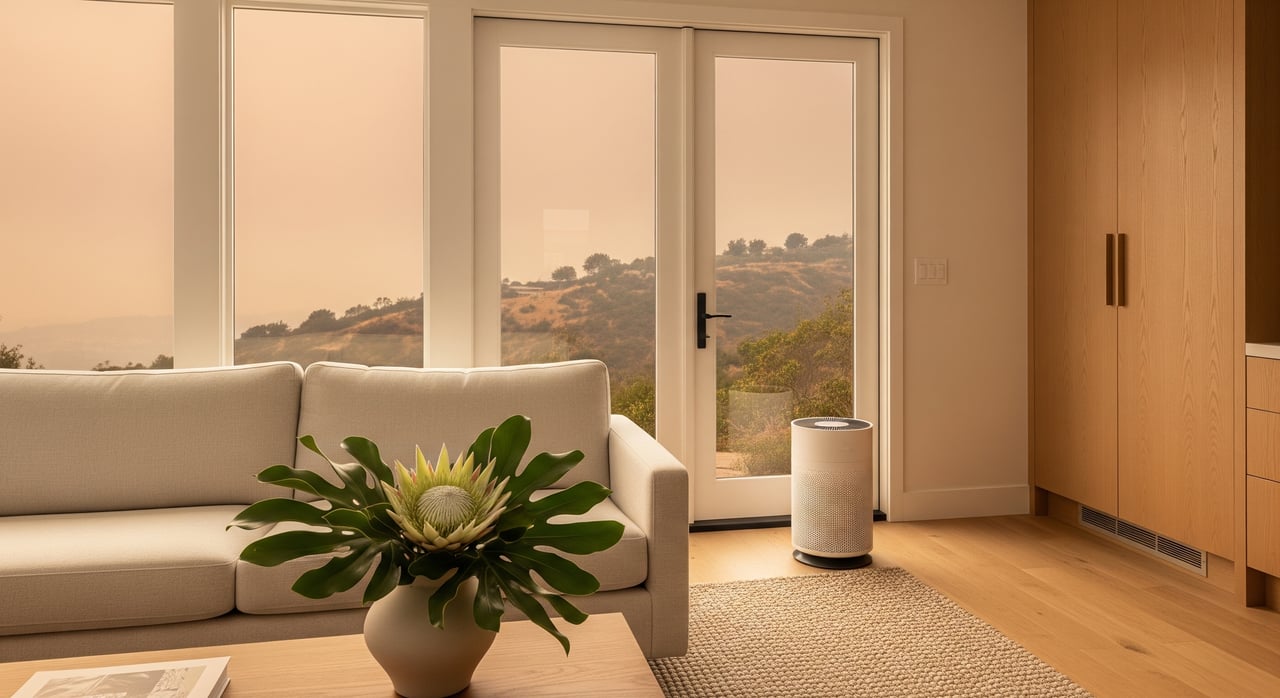
Wildfire smoke does not have to take over your home. If you live in Scripps Ranch, you know how fast Santa Ana winds can push smoke into our canyons and streets. You want a simple plan that keeps your indoor air clean and your family comfortable when the AQI spikes. In this guide, you will learn how to set up a clean room, use your HVAC the right way, choose filters and purifiers that actually work, and prepare for outages and evacuations. Let’s dive in.
Why wildfire smoke matters in Scripps Ranch
Scripps Ranch sits near canyons and foothills, which means smoke can travel quickly during hot, dry, offshore wind events. On smoky days, tiny particles known as PM2.5 can slip indoors and irritate eyes, lungs, and hearts. Children, older adults, pregnant people, and anyone with asthma, COPD, or heart disease should take extra care.
Follow local alerts and evacuation guidance from county and city resources. Start with the regional preparedness hub at Ready San Diego, and review state wildfire readiness from Ready for Wildfire.
Watch the AQI and act early
Use the Air Quality Index, or AQI, to decide when to change your routine. The federal site for wildfire smoke, AirNow, explains each AQI category and what actions to take. In general:
- 0–50: Good. Normal activity.
- 51–100: Moderate. Sensitive groups should watch symptoms.
- 101–150: Unhealthy for sensitive groups. Start using indoor filtration and limit outdoor time for those at risk.
- 151–200: Unhealthy. Everyone should reduce outdoor activity and stay in filtered indoor spaces.
- 201–300: Very Unhealthy. Stay indoors with strong filtration.
- 301+: Hazardous. Avoid outdoor exposure; follow official guidance.
When the AQI reaches unhealthy levels, you should prepare or move into a filtered clean room and adjust your HVAC.
Build a clean room in minutes
A clean room is a single space in your home where you keep air as particle-free as possible. It is simple and effective, especially during short smoke episodes.
Choose the right room
Pick a central room where you spend time, such as a bedroom or living room. Fewer windows are better. Close windows and doors. Close fireplace dampers and any outdoor-air intake vents if you have them.
Seal leaks fast
You do not need a remodel to block smoke. Try these quick fixes:
- Add adhesive weatherstripping to drafty window and door frames.
- Use a door sweep or a rolled towel at the bottom of doors.
- Place inexpensive foam gaskets behind outlet and switch plates on exterior walls.
- For multi-day events, use removable window-sealing film or painter’s tape to reduce gaps.
Also avoid creating indoor pollution. Skip long cooking on gas stoves, do not burn candles or incense, and avoid vacuuming unless your vacuum has a true HEPA filter.
Run a HEPA air cleaner
Portable air cleaners work well in a clean room. Choose a unit with a true HEPA filter. “HEPA-type” or ionizers are not the same. The EPA’s guidance on protecting indoor air during wildfire smoke explains why HEPA is effective for fine particles like PM2.5.
- Size matters. Check the unit’s CADR (clean air delivery rate) and match it to your room. When in doubt, size up.
- Run it on high during smoke events. Place it where airflow is not blocked and where you spend time.
- For large spaces, use more than one unit or focus on one well-sealed clean room.
Use your HVAC to filter smoke
Your central system can help if you run it the right way. The goal is to filter indoor air and limit smoky outdoor air from coming in.
Set to recirculate and run the fan
During heavy smoke, run the system on recirculate and keep the blower fan on. This keeps air moving through the filter. The EPA and industry groups support reducing outdoor air intake during smoke events and circulating indoor air through filtration. Remember that running the fan continuously uses more energy, so reserve this for smoky days.
Upgrade to the right filter
Filters are rated by MERV. Higher numbers capture smaller particles. Many homes use MERV 8 to 11. For wildfire smoke, MERV 13 is often recommended if your system can handle it. MERV 13 captures far more fine PM2.5 than MERV 8. Always confirm your system can support a higher-MERV filter without restricting airflow. The ASHRAE filtration and air-cleaning resources explain the trade-offs and why pressure drop matters.
- If your system supports it, install MERV 13 before smoke season and keep spares on hand.
- If not, use the highest MERV your system allows and rely more on portable HEPA units in your clean room.
- Replace clogged filters promptly after heavy smoke exposure.
What if you cannot use MERV 13?
Some older or tightly sized systems cannot handle high-MERV filters. That is okay. Use MERV 8 to 11 as permitted and add portable HEPA cleaners where you spend the most time. Sealing leaks in ductwork is also helpful, since leaky ducts can pull smoky air into living spaces and bypass filtration. Duct sealing is often a professional job.
Quick fixes for the whole home
- Shut or bypass any fresh-air ventilators, HRVs, or ERVs during heavy smoke. Resume normal ventilation once outdoor air improves.
- Keep the fireplace damper closed. Do not use wood-burning appliances during smoke events.
- Close bathroom and kitchen exhaust fans unless needed for short bursts. Exhaust fans can draw smoky air in through cracks elsewhere.
Masks and going outside
If you must go outside during smoky periods, use a NIOSH-certified N95 respirator. Fit matters. Surgical masks do not filter fine particles well. For children, proper fit is difficult, so the best protection is to keep them indoors in a filtered space. See the CDC’s wildfire smoke guidance for health precautions and mask tips.
Prepare for outages
Smoke events often arrive with high winds that can trigger outages. Plan to keep filtration running if the power goes out:
- Use battery backups or a UPS for small HEPA units and medical devices.
- If you use a portable generator, operate it only outdoors, far from doors and windows, and never in garages or enclosed spaces. Install carbon monoxide detectors with battery backup. Review outage readiness and safety from SDG&E.
Your smoke-season go-bag
Scripps Ranch families should keep a simple, smoke-focused kit ready. The county’s Ready San Diego site offers evacuation checklists. Add items that help with smoke specifically:
- NIOSH-certified N95 respirators for each person.
- Essential medications and copies of medical records.
- Phone chargers and a power bank.
- Water and shelf-stable snacks.
- Battery-powered radio and extra batteries.
- Spare HVAC filters and a spare HEPA filter for your air cleaner.
- Pet supplies, carriers, and medications.
For wildfire readiness beyond smoke, review statewide tips from Ready for Wildfire.
Simple checklists
Pre-season
- Install the best HVAC filter your system supports and buy spares.
- Pick your clean room and measure it so you can size a HEPA unit.
- Stock weatherstripping, door sweeps, and window-sealing film.
- Build go-bags with N95s, meds, documents, and pet supplies.
- Sign up for regional alerts at Ready San Diego.
During smoke
- Close windows and doors; close the fireplace damper.
- Set HVAC to recirculate and run the fan; use your best filter.
- Run HEPA cleaner(s) on high in the clean room.
- Avoid indoor smoke sources and gas-heavy cooking.
- Wear an N95 if you must go outside.
- Monitor the AQI at AirNow and follow local guidance.
If power goes out
- Use battery backups for critical devices and small purifiers.
- If using a generator, follow safety rules and use carbon monoxide detectors.
- Consider relocating to a cleaner indoor space if filtration is not possible.
After the smoke clears
- Open windows and air out the home once AQI returns to good or moderate.
- Replace clogged HVAC filters and service HEPA units per manufacturer instructions.
- Wipe settled ash with a damp cloth and avoid stirring dust.
Local resources to bookmark
- AirNow wildfire smoke and AQI: Real-time AQI and health actions.
- EPA: Protecting indoor air during wildfire smoke: Clean room and HVAC tips.
- CDC: Wildfire smoke: Health guidance and mask use.
- Ready San Diego: Alerts, evacuation checklists, and local planning.
- Ready for Wildfire: Statewide preparedness and defensible space.
- ASHRAE filtration and air cleaning: Filter guidance and system considerations.
- SDG&E: Outage updates and safety information.
When you prepare ahead and act early, you protect your health and keep your home more comfortable during smoky days. As a Scripps Ranch homeowner, a clean room, the right filter, and a small go-bag are simple steps that make a big difference.
If you would like local, practical advice on getting your home market-ready or safer for the season, reach out. Our team brings a service-first mindset and deep neighborhood experience to every conversation. Get started here with Unknown Company and get your instant home valuation.
FAQs
What is the AQI and when should I take action for wildfire smoke?
- The AQI measures air quality on a scale from Good to Hazardous. Use AirNow’s wildfire smoke guidance; begin using filtered indoor spaces around AQI 101–150 and limit outdoor time when AQI is 151 or higher.
How do I pick a HEPA air purifier for my clean room?
- Choose a true HEPA unit and match its CADR or stated room size to your clean room’s square footage; for smoke, a higher-capacity unit is better, and running it on high improves results.
Should I upgrade my HVAC filter to MERV 13 for smoke?
- MERV 13 captures more fine particles, but only use it if your system can handle the airflow; if not, use the highest MERV allowed and rely on portable HEPA cleaners, per ASHRAE guidance.
What should I avoid doing indoors during a smoke event?
- Avoid long cooking on gas stoves, burning candles or incense, smoking, and vacuuming without a HEPA vacuum; these activities add particles to indoor air per EPA guidance.
Do N95 masks help if I need to go outside?
- Yes. NIOSH-certified N95 respirators reduce exposure to fine particles when worn and fitted correctly; the CDC advises keeping children indoors since proper fit for kids is difficult.
How should I prepare for possible power outages during smoke events?
- Keep batteries or a UPS for small purifiers and devices, consider safe generator use only outdoors, install carbon monoxide detectors with battery backup, and monitor updates from SDG&E.